 By Keith Bell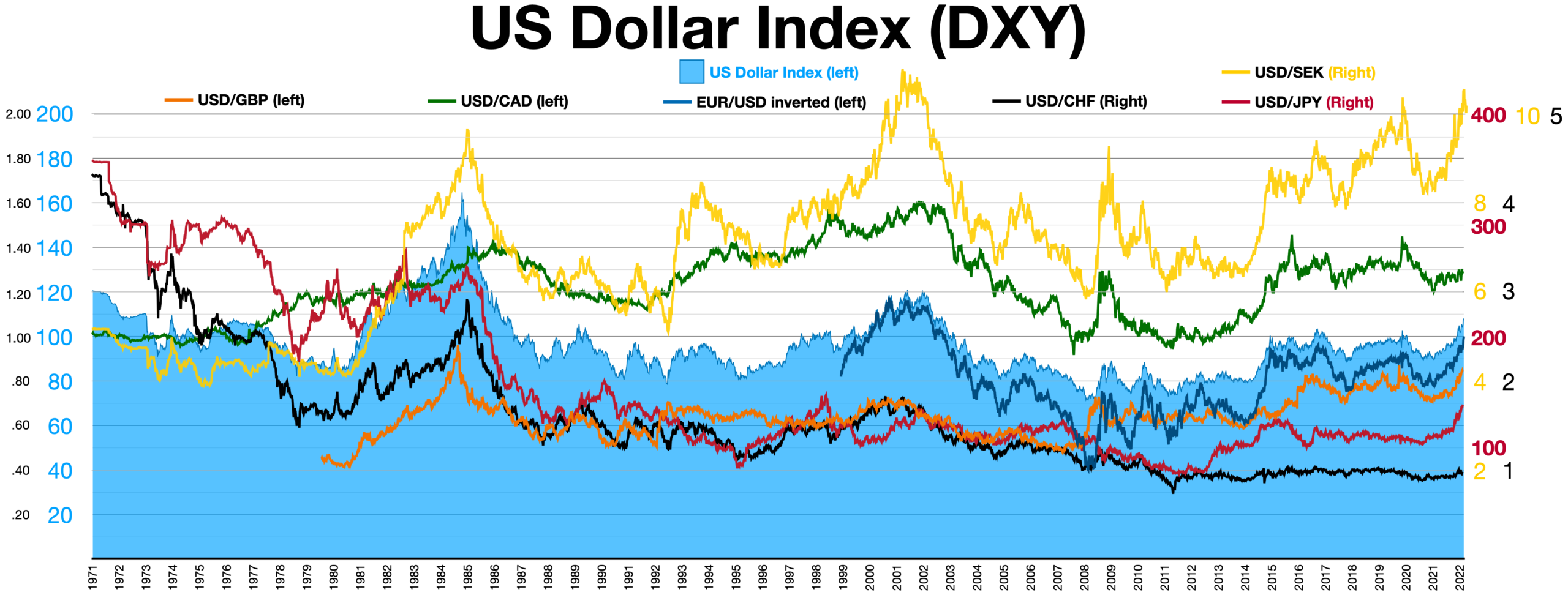
The US Dollar Index has weakened after the soft September jobs report trimmed rate hike bets for October. This shift raises questions about the future of the dollar and interest rates.
Understanding the US Dollar Index
The US Dollar Index (DXY) serves as a vital barometer for the strength of the US dollar against a basket of major currencies. It reflects the dollar’s performance relative to six significant currencies: the Euro, Japanese Yen, British Pound, Canadian Dollar, Swedish Krona, and Swiss Franc. Movements in the index can indicate shifts in economic sentiment and monetary policy expectations.
Recent trends have shown a weakening of the US Dollar Index, particularly after the release of a soft September jobs report. This report has led to speculation that the Federal Reserve may reconsider its plans for interest rate hikes in October. A decline in the index suggests that investors are less confident in the dollar’s future strength, which can significantly impact global trade and investment.
Several factors influence the US Dollar Index:
- Interest Rates: Higher rates typically strengthen the dollar.
- Economic Data: Strong economic indicators boost investor confidence.
- Market Sentiment: Political events and global instability can affect currency values.
Understanding these dynamics is crucial as the financial landscape continues to evolve.
Impact of September Jobs Report
The release of the September jobs report has had a significant impact on the US Dollar Index, contributing to its recent weakness. Analysts had anticipated a stronger performance, but the report revealed softer job growth than expected, leading to a reassessment of October rate hike probabilities.
Key highlights from the report include:
- Job Growth: The economy added fewer jobs than analysts had projected, raising concerns about the strength of the labor market.
- Wage Growth: While wages showed some increase, the overall data indicated a slowdown, which could affect consumer spending.
- Unemployment Rate: The unemployment rate remained stable, but the lack of strong job creation has led to a cautious outlook.
Market experts suggest that the soft jobs report may lead the Federal Reserve to reconsider its approach to interest rate hikes. With the US Dollar Index responding negatively to the news, many are left questioning whether this is the worst time for rate hikes, as economic indicators suggest potential headwinds ahead.
What Does a Weak Dollar Mean?
A weak dollar can have significant implications for the economy and consumers. When the US Dollar Index declines, it typically indicates that the dollar is losing value against other currencies. This situation can lead to a variety of outcomes, including:
- Increased import costs: A weaker dollar means that importing goods becomes more expensive, which can contribute to inflation as companies pass on those costs to consumers.
- Boost to exports: Conversely, a weaker dollar can make American goods more affordable for foreign buyers. This may enhance export activity, potentially benefiting local manufacturers.
- Impact on tourism: A lower dollar value may attract more international tourists, as their currencies will have greater purchasing power in the U.S. However, it could also deter American tourists from traveling abroad.
- Investor sentiment: A declining US Dollar Index may signal economic uncertainty, affecting investor confidence and leading to volatility in financial markets.
Overall, while a weak dollar can stimulate certain sectors, it also presents challenges that could impact everyday consumers and the broader economy.
October Rate Hike Predictions
As analysts assess the current economic landscape, predictions for an October rate hike have shifted considerably. The US Dollar Index, which measures the currency’s strength against a basket of major currencies, has shown signs of weakening following the release of the September jobs report. This report revealed softer-than-expected job growth, leading many to reconsider the likelihood of an imminent rate increase.
Market expectations are now leaning towards a more cautious approach from the Federal Reserve. Key factors influencing these predictions include:
- Economic Growth: Slower growth could prompt the Fed to delay any rate hikes.
- Inflation Rates: Continued inflationary pressures may not be enough to warrant immediate action.
- Global Economic Conditions: International uncertainties can impact the US economy and the strength of the US Dollar Index.
Experts remain divided, with some advocating for a hike to combat inflation, while others caution against potential economic repercussions. As October approaches, all eyes will be on the Fed’s next moves and the broader implications for the US Dollar Index.
Market Reactions to Economic Data
The recent fluctuations in the US Dollar Index have drawn significant attention from analysts and investors alike. Following the release of the September jobs report, which fell short of expectations, market reactions have been mixed.
Many traders interpreted the softer jobs data as a signal that the Federal Reserve might pause its rate hikes, leading to a decline in the dollar’s value. This shift can be attributed to a more cautious outlook on inflation and employment growth.
- Currency Markets: The DXY experienced a noticeable drop, with many currencies gaining strength against the dollar.
- Stock Market: Equities reacted positively initially, buoyed by the prospect of lower interest rates, which could stimulate spending and investment.
- Bond Market: Yields on Treasury bonds fell, reflecting investor sentiment that rate hikes may be off the table for now.
As the market digests this information, the question remains: will the US Dollar Index stabilize, or are further declines ahead as economic indicators evolve?
Future Trends for the Dollar
As the US Dollar Index (DXY) continues to show volatility, analysts are closely monitoring future trends that could influence its trajectory. The recent soft September jobs report has raised questions about the timing and necessity of future rate hikes, leaving many investors uncertain about the path ahead.
Several factors are expected to shape the future of the dollar:
- Inflation Rates: Persistent inflation may force the Federal Reserve to reconsider its stance on interest rates, which could lead to potential strengthening or weakening of the dollar.
- Global Economic Conditions: Economic performance in major trading partners, such as the European Union and China, will play a crucial role in determining the dollar’s position on the global stage.
- Geopolitical Events: Ongoing geopolitical tensions can create uncertainty, impacting the dollar’s strength as investors seek safe-haven assets.
- Market Sentiment: Investor perceptions and expectations regarding monetary policy will continue to influence the US Dollar Index, especially in response to upcoming economic data.
Ultimately, the interplay of these factors will be key in assessing whether the current environment is indeed the worst time for rate hikes.
By Wikideas1 via Openverse
Where this came from
You might also like
- World Cup Qualifiers: What Are the Best Hosting Options?
- Asian Games 2026 wrestling: India’s Silver Ends 64-Year Wait
- Asian Games 2026 highlights: Best moments of Day 12